Start with the space and the members
An equipment list begins with the room, not the catalogue. Measure the floor area, the ceiling height, the entrances and the lift or stairs that equipment must pass through. Then write down who will train: the number of members, their level, and the peak hours. A gym with forty members and one busy evening hour needs a different list from a studio that runs ten-person classes.
A common mistake is to buy too many machines and too little floor. People need space to move, to set up a bench and to load a barbell. As a rough rule, plan the floor first and then choose equipment to fit it.
Decide the type of facility
- Small commercial gym. A mix of strength, free weights and some cardio.
- Yoga or pilates studio. Mats, blocks, straps, rings, balls, props and storage.
- CrossFit or functional box. Racks, barbells, plates, kettlebells, boxes, ropes and floor protection.
- Hotel or office fitness room. A compact set that requires little supervision.
Our page for gyms and studios describes the typical sets for each case.
Build the equipment list
A basic list for a small strength-focused gym can be grouped like this:
| Zone | Typical equipment | Notes |
|---|---|---|
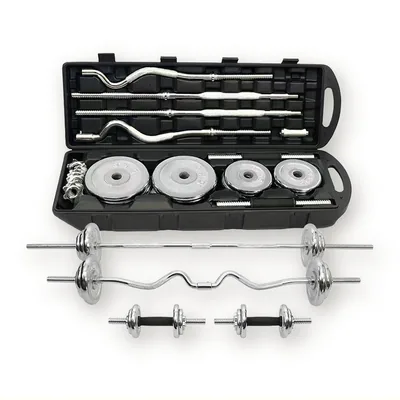
| Free weights | Dumbbell range with rack, kettlebells, benches | Choose weight steps that match your members; weights are often priced per kg |
| Racks and platforms | Power rack, Olympic barbells, plates, collars, flooring | Heavy; check ceiling height and floor load |
| Machines | Smith machine, cable crossover, selectorised machines | Specify commercial class S where required |
| Cardio | Treadmills, bikes, steppers | Electrical; service and spare parts matter |
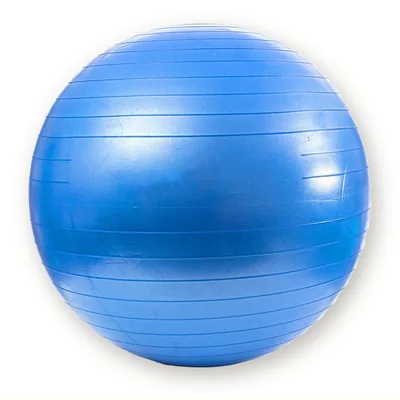
| Functional | Mats, bands, medicine and slam balls, ropes, hoops | Low cost, high use |
| Storage and extras | Racks, hooks, mirrors, bottles, towels | Often forgotten in the budget |
For a class-based studio, replace the machines with props in matching quantities, with one set per participant and a margin for wear. Take a look at the strength machines, free weights, cardio and yoga and pilates ranges.
Commercial class matters
If the public or paying members use the equipment, the standard series EN ISO 20957 expects class S (studio) equipment. Home class H equipment is built for lighter use. State the class in your order and ask for the test report where one exists. If a supplier cannot tell you the class, take that as a warning. We explain classes in our guide to EN ISO 20957.
Budget: the line items people forget
Equipment is only part of the cost. Build the budget with these lines:
- equipment, at the price per piece in your offer;
- freight to the site, and unloading and carrying heavy items;
- customs duty and VAT, if you import yourself;
- flooring, mirrors and wall protection;
- assembly and installation, including any electrical work for cardio;
- storage for plates, bars and props;
- spare parts and a service plan;
- a reserve for items you will realise you need after opening.
Heavy items such as racks, plates and treadmills are quoted delivered, usually by sea, and sometimes from 20–50 units for a standalone order. For a single gym, those items are bundled into one order together with lighter goods, so that the project goes in one shipment. That is what a fit-out service is for. See our gym fit-out page.
Layout and safe distances
Leave clear space around every machine and rack for loading, spotting and getting off the equipment. Keep the free-weight zone away from the entrance and from cardio, because dropped weights and noise disturb everyone. Place the heaviest items on the most solid part of the floor, and check what the floor can carry before you order plates and racks. Rubber flooring under free weights protects the floor and reduces noise, and it is cheaper to plan before delivery than to add afterwards. Draw the layout to scale and share it with the supplier, so that the quantities on the list match what fits.
Delivery and timing
Allow 8–12 weeks from order to warehouse, with production of about 25–45 days and rail or sea transport of about 25–45 days. Add time for the last step, which is the delivery to your site, unloading and assembly. If you open to the public on a fixed date, work backwards from that date and add a margin of two to three weeks for delay. A January opening needs the order placed by mid-September, which is the same date as for retailers.
Check delivery conditions in advance: access for a truck, a loading dock or a lift, the time available for unloading, and who carries what. A rack that arrives in pieces can still be hard to move through a narrow stairway.
Compliance in a fit-out
As the buyer of equipment for your own use, you still rely on products that meet EU rules. Treadmills and other electrical cardio need CE marking under the Low Voltage and EMC directives and RoHS, and Bluetooth or app functions bring in the Radio Equipment Directive. Manuals should be in the language your staff and members understand. Ask for the documents with the delivery and keep them in your files. When we supply the goods as importer, we provide the documentation.
Service, spare parts and warranty questions
Treadmills and machines wear. Before you buy, ask what happens when a belt, a cable or a pad needs replacing, and how long spare parts take to arrive. For heavy cardio we treat the project as bespoke because service and spare-parts planning can change the choice of model. We do not offer a general promise about warranty periods in this guide, so confirm the terms in your offer.
A step-by-step checklist
- Measure the room and note entrances, ceiling height and floor load.
- Define members, peak numbers and the training style.
- Draw the layout with floor space for each zone.
- Build the equipment list with class S where required.
- Request one offer for the whole list, and ask for samples of small items.
- Check delivery, installation and service in the offer.
- Place the order with a date that leaves a margin.
If you send us the room plan and the list, we answer with a single offer. Request a quote for the project.